
How to Get Your First DJ Gig
-
 Jun 23, 2026
 -
 By
Learn How To Be a DJ
By
Learn How To Be a DJ -
 How To Be a DJ
 -
 9 min read

How to Get Your First DJ Gig: A Complete Beginner’s Guide
Starting your DJ journey is exciting. You’ve spent hours practising transitions, building playlists and learning your equipment. However, one question eventually comes to every new DJ:
How do I get my first DJ gig?
The truth is that every successful DJ started exactly where you are now. Whether your dream is to play weddings, clubs, bars, private parties or festivals, the first booking is often the hardest to secure.
The good news is that getting your first DJ gig is completely achievable, even if you have no experience, no industry contacts and no previous bookings.
In this guide, you’ll learn exactly how to get your first DJ gig, how to build credibility, where to find opportunities and how to turn one booking into many more.
Quick Answer: How to Get Your First DJ Gig
The fastest way to get your first DJ gig is to:
- Develop basic DJ skills
- Create a professional DJ profile
- Record a quality DJ mix
- Build a social media presence
- Network with local venues and DJs
- Offer to play smaller events initially
- Promote yourself consistently
- Deliver a great performance
- Ask for testimonials and referrals
Many successful DJs secured their first booking through networking and persistence rather than technical ability alone.
Why Getting Your First DJ Gig Is So Difficult
Many beginner DJs believe they need expensive equipment or years of experience before anyone will book them.
That simply isn’t true.
Venue owners, event organisers and clients are often looking for DJs who are:
- Reliable
- Professional
- Easy to work with
- Enthusiastic
- Able to read a crowd
Technical perfection is rarely the deciding factor.
The challenge is proving that you can deliver a good experience before you’ve had the chance to build a track record.
What Type of DJ Gig Should You Aim For First?
Not all DJ gigs are equal.
Some are far easier to obtain than others.
Easier First DJ Gigs
| Type of Event | Difficulty | Typical Pay |
|---|---|---|
| House Parties | Easy | Free to £100 |
| Birthday Parties | Easy | £50 to £250 |
| Community Events | Easy | £50 to £300 |
| Student Events | Easy | £50 to £300 |
| Small Bars | Medium | £100 to £400 |
| Corporate Events | Medium | £200 to £600 |
Harder First DJ Gigs
| Type of Event | Difficulty |
|---|---|
| Nightclubs | High |
| Festivals | Very High |
| International Events | Very High |
| Major Wedding Venues | High |
Many beginner DJs make the mistake of aiming straight for clubs.
In reality, gaining experience through smaller events often creates a faster path to bigger opportunities.
Step 1: Learn the Fundamentals of DJing
Before seeking bookings, ensure you can confidently perform a full DJ set.
You should understand:
Beatmatching
Matching the tempo of two tracks.
Phrase Mixing
Bringing tracks together at the correct point in the music.
EQ Control
Using bass, mids and highs effectively.
Track Selection
Choosing songs that suit the audience.
Crowd Reading
Understanding what keeps people dancing.
A beginner who can maintain energy and select great music will often outperform a technically advanced DJ who ignores the crowd.
Step 2: Create a DJ Demo Mix
One of the best ways to get your first DJ gig is by creating a demo mix.
Think of it as your DJ CV.
What Should a Demo Mix Include?
- 20 to 60 minutes long
- High audio quality
- Smooth transitions
- Appropriate music selection
- Music that reflects your chosen style
For example:
- Wedding DJs should showcase popular songs
- House DJs should showcase club tracks
- Open-format DJs should demonstrate versatility
Upload your mix to:
- SoundCloud
- Mixcloud
- YouTube
This gives potential clients something to listen to before booking you.
Step 3: Build Your DJ Brand
Your brand helps people remember you.
You don’t need a huge marketing budget.
You simply need consistency.
Create a DJ Name
Choose a name that is:
- Easy to remember
- Easy to spell
- Professional
Design a Simple Logo
A clean logo creates credibility.
Use Consistent Branding
Use the same:
- DJ name
- Colours
- Profile picture
- Biography
Across all platforms.
Step 4: Create Social Media Profiles
Many DJs receive their first booking through social media.
Focus on:
Post:
- Practice clips
- Equipment photos
- Event footage
- DJ tips
TikTok
Short performance videos can generate significant visibility.
Many local event organisers still use Facebook groups.
YouTube
Upload:
- DJ mixes
- Tutorials
- Live performances
Step 5: Build a Simple DJ Website
A website instantly increases trust.
Include:
- About section
- Demo mixes
- Photos
- Contact form
- Testimonials
A simple website often separates hobby DJs from serious DJs.
Step 6: Network With Local DJs
Networking remains one of the most powerful ways to get your first DJ gig.
Many DJs receive opportunities through referrals.
Attend Local Events
Meet:
- DJs
- Promoters
- Venue owners
- Event organisers
Support Other DJs
Share their events.
Engage with their content.
Build genuine relationships.
Many opportunities come through people who know, like and trust you.
Step 7: Contact Local Venues
Don’t wait for opportunities to come to you.
Create a list of:
- Bars
- Restaurants
- Lounges
- Hotels
- Community venues
Reach out professionally.
Sample Introduction
“Hi, my name is [DJ Name]. I’m a local DJ specialising in [genre]. I’d love the opportunity to discuss future DJ opportunities at your venue. Here’s a recent mix showcasing my style.”
Keep it short and professional.
Step 8: Offer to Play Smaller Events
Many successful DJs gained experience by performing at:
- Charity events
- School events
- Community festivals
- Friends’ parties
- Family celebrations
These gigs provide:
- Experience
- Photos
- Videos
- Testimonials
- Confidence
Every booking builds momentum.
Step 9: Create Promotional Content
People book DJs they can see performing.
Create content showing:
DJ Setup Videos
Show your equipment in action.
Crowd Reaction Clips
Social proof matters.
Behind-the-Scenes Content
Show your personality.
Educational Content
Teach simple DJ tips.
This positions you as someone knowledgeable and trustworthy.
Essential DJ Equipment for Your First Gig
You do not need the most expensive setup.
Budget Beginner Setup
| Equipment | Example |
|---|---|
| Controller | Pioneer DDJ-FLX4 |
| Headphones | Pioneer HDJ-CUE1 |
| Laptop | Existing Laptop |
| Software | Rekordbox |
| Speakers | Entry-Level PA System |
Professional Beginner Setup
| Equipment | Example |
|---|---|
| Controller | Pioneer DDJ-FLX6 GT |
| Headphones | Pioneer HDJ-X5 |
| Speakers | Alto TS Series |
| Microphone | Shure SM58 |
The audience rarely cares how expensive your equipment is.
They care whether the music is good.
Pros and Cons of Accepting Free DJ Gigs
Pros
- Gain experience
- Build confidence
- Obtain testimonials
- Create content
- Meet industry contacts
Cons
- Can undervalue your services
- May attract poor-quality clients
- Difficult to transition to paid work if overused
A balanced approach works best.
A few strategic free gigs can help launch your DJ career.
Common Mistakes Beginner DJs Make
Waiting Until They Feel Perfect
You will never feel completely ready.
Start anyway.
Buying Too Much Equipment
Skills matter more than gear.
Ignoring Networking
Many bookings come from relationships.
Playing Only Music They Like
Your audience matters more than your personal preferences.
Not Promoting Themselves
People cannot book a DJ they do not know exists.
Giving Up Too Quickly
Most successful DJs faced multiple rejections before securing bookings.
Persistence matters.
Expert Tips for Landing Your First DJ Gig
Focus on Reliability
Being dependable is often more valuable than being technically brilliant.
Arrive Early
Professionalism creates repeat bookings.
Overdeliver
Do more than the client expects.
Collect Testimonials
Every successful event should generate social proof.
Record Everything
Photos and videos become future marketing assets.
Keep Learning
Every gig teaches valuable lessons.
Real World Example
Imagine two beginner DJs.
DJ A spends years practising at home but never promotes themselves.
DJ B spends six months practising, creates a demo mix, attends local events and contacts venues.
Which DJ gets booked first?
Almost always DJ B.
Opportunities usually go to DJs who actively put themselves in front of potential clients.
How Long Does It Take to Get Your First DJ Gig?
There is no universal timeline.
Some DJs secure bookings within weeks.
Others take several months.
Typical timeframes:
| Activity Level | Estimated Time |
|---|---|
| High Effort | 1 to 3 Months |
| Moderate Effort | 3 to 6 Months |
| Low Effort | 6+ Months |
Consistency is usually the deciding factor.
Frequently Asked Questions
How do I get my first DJ gig with no experience?
Start by creating a demo mix, building social media profiles, networking locally and offering to play smaller events.
Do I need expensive DJ equipment?
No. Basic modern DJ controllers are capable of delivering excellent performances.
Should I DJ for free?
A small number of strategic free gigs can help build experience and credibility.
How many songs should I know before my first gig?
You should have enough music for at least twice the expected set length.
Can I get DJ gigs through Instagram?
Yes. Many DJs receive enquiries through Instagram and other social platforms.
What music should I play at my first gig?
Focus on the audience’s preferences rather than your own.
Do clubs hire beginner DJs?
Some do, but bars, lounges and private events are often easier starting points.
How important is networking?
Networking is one of the most effective ways to secure DJ bookings.
Should I have a website?
Yes. A website increases credibility and makes it easier for clients to contact you.
What should I charge for my first DJ gig?
This varies by location and event type. Many beginners start at lower rates while building experience.
Is Mixcloud or SoundCloud better for DJ mixes?
Both can be effective. Mixcloud is particularly popular among DJs because of licensing arrangements.
How do I approach venue owners?
Keep your message concise, professional and include a link to your demo mix.
How can I stand out from other DJs?
Focus on professionalism, reliability, branding and audience experience.
Do I need business cards?
They can still be useful at networking events.
Can I become a successful DJ starting later in life?
Absolutely. Many successful DJs began well into adulthood.
Conclusion: How to Get Your First DJ Gig
Getting your first DJ gig can feel challenging, but it becomes much easier when you follow a clear plan.
Learn the fundamentals.
Create a quality demo mix.
Build your online presence.
Network consistently.
Approach venues professionally.
Most importantly, take action.
Every successful DJ started somewhere, and your first booking could be much closer than you think.
Keep practising, keep promoting yourself and keep learning.
For more beginner-friendly DJ guides, equipment reviews, mixing tutorials and career advice, visit LearnHowToBeADJ.com and continue building your DJ journey.
Want The Complete Roadmap To Become A DJ?
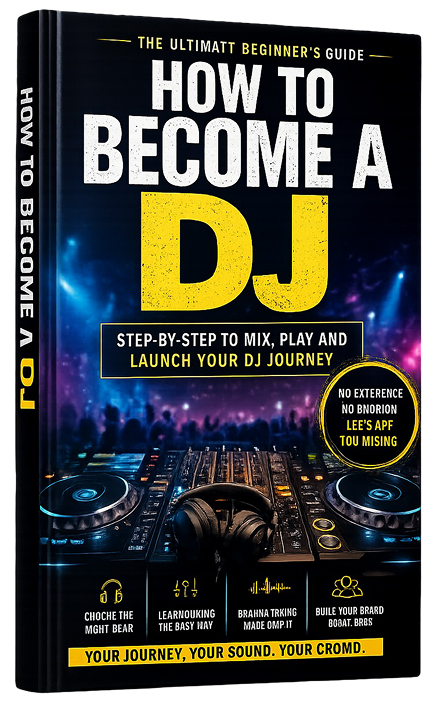
Step by Step to mix, play and launch your DJ journey with confidence.
- Beginner-friendly
- Easy to follow
- Packed with practical tips
 GET YOUR COPY NOW