
How to Mix House Music
-
 Jun 23, 2026
 -
 By
Learn How To Be a DJ
By
Learn How To Be a DJ -
 How To Be a DJ
 -
 9 min read

How to Mix House Music
House music is one of the easiest genres for beginner DJs to learn, yet it is also one of the most rewarding to master.
If you have ever watched a professional DJ seamlessly blend one track into another and wondered how they make it sound so effortless, you are in the right place.
Learning how to mix house music is one of the best ways to build your confidence as a DJ. The steady beats, predictable phrasing and consistent tempo make house music ideal for developing your mixing skills.
In this comprehensive guide, you will learn:
• How house music is structured
• How to beatmatch house tracks
• How to use EQs correctly
• How to create smooth transitions
• How professional DJs build energy
• Common mistakes beginners make
• Advanced tips used by club DJs
By the end of this guide, you will have a clear roadmap for mixing house music confidently and professionally.
Quick Answer: How to Mix House Music
To mix house music successfully:
- Choose tracks with compatible BPMs and musical styles.
- Beatmatch the incoming track to the playing track.
- Start the new track at the beginning of a phrase.
- Use EQs to avoid frequency clashes.
- Gradually blend the tracks together.
- Remove the outgoing track smoothly.
- Maintain energy and groove throughout the set.
Because most house music ranges between 120 and 130 BPM and follows predictable song structures, it is one of the easiest genres for DJs to learn.
Why House Music Is Perfect for Learning to DJ
One reason so many beginner DJs start with house music is its consistency.
Most house tracks feature:
| Characteristic | Typical Range |
|---|---|
| BPM | 120–130 |
| Time Signature | 4/4 |
| Phrase Length | 8, 16 or 32 Bars |
| Kick Drum Pattern | Four On The Floor |
| Transition Friendly | Yes |
| Beginner Friendly | Excellent |
The repetitive rhythm allows DJs to focus on technique rather than fighting against unpredictable song structures.
As someone who has spent years playing house music in clubs, bars, private events and radio shows, I can confidently say that house music remains one of the best training grounds for any aspiring DJ.
Understanding House Music Structure
Before mixing house music, you must understand how tracks are built.
Most house tracks follow a predictable structure.
Intro
Usually contains:
• Drums
• Percussion
• Minimal instruments
This section is designed specifically for DJs to mix.
Build Up
Energy gradually increases.
Additional sounds enter the track.
Breakdown
The drums often disappear.
Melodies and vocals become more prominent.
Drop
The full energy returns.
The dance floor reacts.
Outro
The track begins to simplify.
Elements are removed.
This section is often used for mixing into the next record.
How to Count Bars and Phrases
One of the most important skills when learning how to mix house music is phrase matching.
Most house music follows:
• 8 Bar Phrases
• 16 Bar Phrases
• 32 Bar Phrases
Example:
1 2 3 4
2 2 3 4
3 2 3 4
4 2 3 4
After 8, 16 or 32 bars, something significant usually changes.
Professional DJs use these natural changes as mixing points.
Equipment Needed to Mix House Music
Entry Level Setup
| Equipment | Recommendation |
|---|---|
| Controller | Pioneer DDJ-FLX4 |
| Software | Rekordbox |
| Headphones | Pioneer HDJ-CUE1 |
| Speakers | Pioneer DM40 |
Intermediate Setup
| Equipment | Recommendation |
|---|---|
| Controller | Pioneer DDJ-FLX6 GT |
| Software | Rekordbox or Serato |
| Monitors | KRK Rokit 5 |
| Headphones | Pioneer HDJ-X5 |
Club Standard Setup
| Equipment | Recommendation |
|---|---|
| Media Players | Pioneer CDJ-3000 |
| Mixer | Pioneer DJM-A9 |
| Software Preparation | Rekordbox |
Learning on entry level equipment is perfectly acceptable.
The skills transfer directly to professional club setups.
Step by Step: How to Mix House Music
Step 1: Select Compatible Tracks
Choose tracks that:
• Have similar BPMs
• Share a similar vibe
• Work harmonically together
Avoid jumping from deep house into hard techno without a clear reason.
The smoother the journey, the better the mix.
Step 2: Analyse the Incoming Track
Before mixing:
Listen to:
• Intro
• Breakdown
• Drop
• Outro
Identify potential mixing points.
Professional DJs know their music inside out.
Step 3: Beatmatch the Tracks
Beatmatching means matching the speed of two tracks.
For example:
Track A = 124 BPM
Track B = 126 BPM
Adjust Track B until both tracks play at the same speed.
Modern DJ software offers sync functionality.
However, learning manual beatmatching remains an important skill.
Manual Beatmatching Process
- Play Track A.
- Cue Track B in headphones.
- Match BPMs.
- Listen carefully.
- Adjust the jog wheel if necessary.
- Keep both kick drums aligned.
Practice daily.
It becomes second nature surprisingly quickly.
Step 4: Phrase Match the Tracks
This is where many beginners struggle.
Do not simply press play randomly.
Instead:
Start Track B at the beginning of a new phrase in Track A.
This creates natural sounding transitions.
The crowd may not consciously notice it.
However, they will definitely feel it.
Step 5: Use EQs Correctly
EQ mixing separates amateur DJs from professional DJs.
Most DJ mixers have:
Low EQ
Controls bass frequencies.
Mid EQ
Controls vocals and instruments.
High EQ
Controls hi hats and percussion.
Basic House Music EQ Technique
When introducing Track B:
Reduce the bass on Track B.
Allow Track A’s bassline to continue.
Gradually swap basslines.
This prevents muddy sounding mixes.
| Frequency | Action |
|---|---|
| Low | Swap gradually |
| Mid | Blend carefully |
| High | Usually safe to layer |
Step 6: Blend Gradually
House music rewards patience.
Avoid sudden changes.
Instead:
• Slowly raise channel volume
• Gradually introduce EQ
• Let tracks breathe
A smooth transition often sounds more professional than a dramatic one.
Step 7: Exit the Previous Track
Once Track B takes control:
Remove Track A cleanly.
Avoid lingering too long.
Too many overlapping elements can clutter the mix.
Three Popular House Music Mixing Techniques
Technique 1: Long Blend Mixing
Common in:
• Deep House
• Soulful House
• Progressive House
Mixes can last over a minute.
Creates a smooth journey.
Advantages
• Seamless
• Musical
• Professional
Disadvantages
• Requires excellent track selection
Technique 2: Bass Swap Mixing
The most common house mixing technique.
Process
- Match beats.
- Remove incoming bass.
- Blend tracks.
- Swap basslines.
- Remove outgoing track.
This technique works in almost every house set.
Technique 3: Drop Mixing
Popular in:
• Tech House
• Festival House
• Big Room House
The incoming track is introduced during a breakdown and dropped at a key moment.
Advantages
• High impact
• Crowd friendly
Disadvantages
• Can become predictable if overused
How Professional DJs Build Energy
Great DJs think beyond individual mixes.
They manage energy.
Imagine your DJ set as a story.
Opening
Build trust.
Avoid playing your biggest track first.
Development
Increase momentum gradually.
Peak Time
Deliver maximum energy.
Closing
Create a memorable ending.
This approach keeps dance floors engaged.
Harmonic Mixing for House Music
Harmonic mixing involves matching musical keys.
Software such as Rekordbox can analyse keys automatically.
Common systems include:
• Camelot Wheel
• Open Key
Tracks in compatible keys generally sound more musical together.
Benefits of Harmonic Mixing
• Smoother transitions
• Better sounding blends
• Reduced musical clashes
• More professional sets
Although not essential, harmonic mixing can significantly improve your mixes.
Common Mistakes When Learning How to Mix House Music
Mixing Too Early
Allow tracks to breathe.
Do not rush.
Ignoring Phrasing
Tracks should enter and exit naturally.
Poor phrasing sounds awkward.
Overusing Effects
Effects should enhance.
Not distract.
Many beginners use too many effects.
Professional DJs often use fewer effects than expected.
Not Knowing Your Music
Track knowledge is a huge advantage.
Listen to your library regularly.
Playing Tracks That Clash
Not every house track works together.
Trust your ears.
Pros and Cons of Mixing House Music
| Pros | Cons |
|---|---|
| Beginner friendly | Can become repetitive |
| Predictable structure | Requires good track selection |
| Easy beatmatching | Subtle mistakes stand out |
| Large music library available | Energy management is crucial |
| Great for skill development | Some styles require long patience |
Expert Tips for Mixing House Music
Practice One Transition Repeatedly
Focus on mastering one mix.
Repeat it until flawless.
Record Every Practice Session
Listening back reveals mistakes you miss in the moment.
Learn EQ Before Effects
EQ control is far more important than flashy effects.
Organise Your Music
Create playlists by:
• Energy level
• Genre
• BPM
• Key
Organisation improves performance dramatically.
Watch the Crowd
The crowd tells you everything.
Energy management matters more than technical perfection.
Example House Music Mixing Workflow
A simple workflow might look like this:
Track 1
124 BPM Deep House
↓
Track 2
124 BPM Vocal House
↓
Track 3
125 BPM Soulful House
↓
Track 4
125 BPM Tech House
↓
Track 5
126 BPM Peak Time House
Notice how the energy increases gradually.
Professional DJs rarely make random jumps.
Frequently Asked Questions
How long should a house music transition be?
Typically between 16 and 64 bars depending on the style.
Deep house often uses longer transitions.
Is house music easier to mix than other genres?
Yes.
House music is generally considered one of the easiest genres for beginners because of its predictable structure.
Should I use sync when mixing house music?
Yes, if it helps.
However, learning manual beatmatching is still highly recommended.
What BPM is most house music?
Most house tracks range between 120 and 130 BPM.
Do professional DJs still beatmatch manually?
Many do.
Others use sync.
The important thing is achieving clean transitions.
What is phrase matching?
Phrase matching means aligning sections of songs so musical changes happen naturally.
Can I mix different styles of house music together?
Absolutely.
Deep house, soulful house, vocal house and tech house can work well together when selected carefully.
How important is harmonic mixing?
Helpful but not essential.
Track selection remains more important.
What is the best DJ software for house music?
Rekordbox, Serato DJ Pro and Traktor are all excellent options.
How often should I practice?
Aim for at least 30 minutes per day.
Consistency beats marathon practice sessions.
What is the fastest way to improve?
Record your mixes and listen back critically.
This accelerates progress dramatically.
Should beginners use effects?
Yes, but sparingly.
Master EQ mixing first.
How many songs should be in a house music set?
A one hour set typically contains between 15 and 25 tracks depending on transition length.
What headphones do DJs use?
Popular choices include Pioneer HDJ-X10, HDJ-X7 and Sennheiser HD25.
Can I learn house music mixing at home?
Absolutely.
Many successful DJs learned entirely from home before performing publicly.
Conclusion: How to Mix House Music Successfully
Learning how to mix house music is one of the most enjoyable and rewarding steps in becoming a DJ.
The genre’s steady rhythm, predictable structure and DJ friendly arrangements make it perfect for beginners. Focus on beatmatching, phrase matching, EQ control and track selection before worrying about advanced tricks.
Remember that every professional DJ started exactly where you are now.
Practice regularly.
Record your mixes.
Learn your music library.
Most importantly, enjoy the process.
With patience and consistency, you will soon be creating smooth, professional sounding house music mixes that keep people dancing.
For more beginner friendly DJ tutorials, equipment guides and practical DJ advice, visit LearnHowToBeADJ.com and continue building your DJ skills.
Want The Complete Roadmap To Become A DJ?
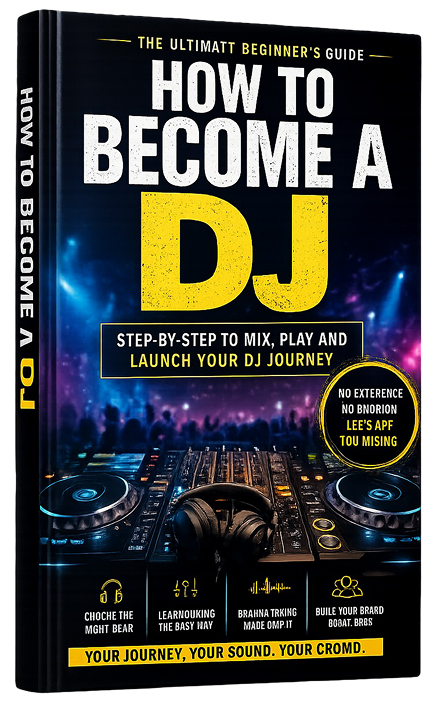
Step by Step to mix, play and launch your DJ journey with confidence.
- Beginner-friendly
- Easy to follow
- Packed with practical tips
 GET YOUR COPY NOW