
How Do I Learn to DJ From Scratch?
-
 Jun 28, 2026
 -
 By
Learn How To Be a DJ
By
Learn How To Be a DJ -
 Gear Reviews
 -
 8 min read

How Do I Learn to DJ From Scratch?
If you have ever watched a DJ perform and wondered whether you could do it too, the answer is absolutely yes.
Thousands of professional DJs started exactly where you are now. They had no experience, very little equipment and no idea where to begin. Like any musical skill, DJing takes time and practice, but it is far easier to learn today than it has ever been.
If you are asking How do I learn to DJ from scratch, this guide will walk you through every step, from choosing your first equipment to performing your first smooth mix with confidence.
By the end of this article, you will know exactly what you need, what you should learn first and how to avoid the mistakes that slow most beginners down.
Quick Answer
If you want to learn to DJ from scratch:
| Step | What to Learn |
|---|---|
| 1 | Understand what DJs actually do |
| 2 | Buy beginner friendly DJ equipment |
| 3 | Learn your DJ software |
| 4 | Build a music library |
| 5 | Learn beatmatching and phrasing |
| 6 | Practise transitions every day |
| 7 | Record yourself |
| 8 | Play for friends before playing publicly |
With consistent practice, many beginners become comfortable mixing within two to three months.
What Does a DJ Actually Do?
Many beginners believe DJs simply press play.
Nothing could be further from the truth.
A DJ carefully selects music, controls energy, reads the audience and creates smooth transitions between songs to keep people dancing.
Professional DJs combine technical skill with creativity.
They understand:
- Music structure
- Song selection
- Timing
- Crowd psychology
- Mixing techniques
- Performance confidence
Learning each of these areas one at a time makes the process far less overwhelming.
What Equipment Do I Need to Learn DJing?
The good news is that you no longer need thousands of pounds worth of equipment.
A modern beginner controller gives you everything you need.
Recommended Beginner Equipment
| Equipment | Why You Need It |
| DJ Controller | Controls your software |
| Laptop | Runs DJ software |
| DJ Software | Organises and mixes music |
| Headphones | Cue the next track |
| Speakers | Hear your mixes clearly |
You can always upgrade later.
The important thing is starting.
Best Beginner DJ Controllers
| Controller | Best For |
| Pioneer DDJ FLX4 | Overall beginner choice |
| AlphaTheta DDJ 200 | Budget beginners |
| Numark Mixtrack Platinum FX | Large jog wheels |
| Hercules Inpulse 500 | Excellent learning features |
| Native Instruments Traktor Kontrol S2 | Traktor users |
Any of these controllers will allow you to learn every core DJ skill.
Which DJ Software Should Beginners Learn?
Most beginner DJs choose one of four platforms.
| Software | Used By |
| rekordbox | Club DJs |
| Serato DJ Lite | Mobile DJs |
| VirtualDJ | Beginners and mobile DJs |
| Traktor Pro | Creative DJs |
If your goal is eventually playing in clubs, learning rekordbox is an excellent long term investment because many professional venues use Pioneer DJ equipment.
How Do I Learn to DJ From Scratch Step by Step?
Step 1: Learn the Basics of Music Structure
Every song contains predictable sections.
These include:
- Intro
- Verse
- Chorus
- Breakdown
- Build up
- Drop
- Outro
Learning where these sections occur makes transitions much easier.
Step 2: Understand Beats and Bars
Most dance music follows groups of four beats.
Four groups of four beats create sixteen bars.
DJs often begin transitions at the start of a new phrase because the music naturally fits together.
This is one of the biggest secrets behind professional sounding mixes.
Step 3: Learn Beatmatching
Beatmatching means matching the tempo of two songs so they play together smoothly.
Modern controllers include Sync buttons.
There is nothing wrong with using Sync while learning.
However, understanding manual beatmatching will improve your musical understanding and help when technology does not behave perfectly.
Step 4: Learn Phrasing
Phrasing is knowing exactly when to introduce the next track.
If both songs change at the same musical point, the transition sounds natural.
If they do not, the mix often sounds awkward.
Phrasing is one of the most valuable skills every DJ can develop.
Step 5: Master Smooth Transitions
Your goal is not showing off.
Your goal is making people enjoy the music.
Begin with simple transitions using:
- Volume faders
- Crossfader
- EQ controls
- Filter effects
Simple transitions almost always sound cleaner than over complicated mixes.
Step 6: Build a Great Music Library
The world’s best equipment cannot compensate for poor music.
Choose songs you genuinely enjoy.
Organise your collection by:
- Genre
- Energy
- BPM
- Mood
- Event type
Keeping your library organised saves enormous amounts of time later.
Step 7: Practise Every Day
Even twenty minutes daily produces excellent progress.
A typical practice session could include:
- Ten minutes of beatmatching
- Ten minutes of transitions
- Ten minutes recording a mini mix
Consistency beats long occasional sessions.
How Long Does It Take to Learn DJing?
Everyone learns differently.
Here is a realistic guide.
| Practice Time | Expected Progress |
| 2 weeks | Basic equipment knowledge |
| 1 month | Simple transitions |
| 2 months | Comfortable mixing similar genres |
| 3 months | Recording complete mixes |
| 6 months | Playing confidently at parties |
| 1 year | Ready for paid opportunities |
Some people progress faster.
Others enjoy learning at a slower pace.
Neither approach is wrong.
Should I Learn Using Sync?
Pros
- Faster learning
- Less frustrating
- Focuses on music selection
- Builds confidence
Cons
- Can hide timing mistakes
- Less understanding of tempo
- Not every setup supports Sync perfectly
A balanced approach is best.
Use Sync while also learning manual beatmatching.
Essential DJ Skills Every Beginner Should Learn
Reading Waveforms
Modern DJ software displays waveforms.
Learn to recognise:
- Breakdowns
- Drops
- Build ups
- Quiet sections
Waveforms become visual road maps.
EQ Mixing
Professional DJs rarely rely only on the crossfader.
Instead they use EQ controls.
Lowering bass frequencies during transitions keeps mixes clean and avoids muddy sounding audio.
Cue Points
Cue points let you jump instantly to important parts of a song.
Many DJs create cue points for:
- Intro
- First beat
- Breakdown
- Chorus
- Outro
This speeds up performances considerably.
Common Beginner Mistakes
Many new DJs experience the same problems.
Fortunately they are easy to fix.
Buying expensive equipment too early
Start small.
Your skills matter far more than your equipment.
Practising without goals
Always decide what you want to improve before starting.
Ignoring music selection
Great song choices often matter more than complicated mixing.
Using too many effects
Effects should enhance the music, not distract from it.
Never recording yourself
Recording exposes mistakes you rarely notice while mixing live.
It is one of the fastest ways to improve.
Expert Tips From Years Behind the Decks
After many years of DJing weddings, private events, clubs and corporate functions, one lesson stands above almost everything else.
People remember how your music made them feel.
They rarely remember how complicated your transitions were.
Focus on:
- Playing the right song
- Watching the audience
- Keeping energy flowing
- Remaining relaxed
- Smiling while performing
Confidence comes from preparation.
Preparation comes from practice.
Pros and Cons of Learning to DJ
Pros
- Fun and rewarding hobby
- Excellent creative outlet
- Opportunities to earn money
- Meet new people
- Improve musical knowledge
- Build confidence
- Flexible career opportunities
Cons
- Equipment can become expensive
- Requires regular practice
- Music purchases add ongoing costs
- Initial learning curve
- Performance nerves
The rewards usually far outweigh the challenges.
Is Learning to DJ Worth It?
Absolutely.
DJing combines music, creativity and technical skill in a way few hobbies can.
Whether you want to entertain friends, perform at weddings, play in clubs or eventually become a professional DJ, the journey begins exactly the same way.
One mix at a time.
Frequently Asked Questions
How do I learn to DJ from scratch without experience?
Start with a beginner controller, learn your DJ software, practise beatmatching, understand song structure and mix regularly.
Can I teach myself to DJ?
Yes. Many successful DJs are self taught using online tutorials, structured practice and regular recording.
What equipment do I need to start DJing?
A DJ controller, laptop, DJ software, headphones and speakers are enough to begin.
Which DJ software is easiest for beginners?
rekordbox, Serato DJ Lite and VirtualDJ are all beginner friendly.
How many hours should I practise each week?
Aim for three to five sessions weekly. Even short sessions build muscle memory.
Can I learn DJing without expensive equipment?
Yes. Affordable beginner controllers provide everything required to learn.
Do I need to know music theory?
No.
Basic understanding of song structure is more important than formal music theory.
Should beginners use Sync?
Yes.
Sync helps beginners focus on mixing while gradually learning manual beatmatching.
How long before I can DJ at a party?
Many beginners are ready after two to three months of consistent practice.
What is the fastest way to improve?
Record every practice session, listen back critically and focus on improving one skill at a time
If you have been asking How do I learn to DJ from scratch, hopefully you now realise that becoming a DJ is not about expensive equipment or natural talent. It is about learning the fundamentals, practising consistently and enjoying the process.
Start with simple equipment. Learn one skill at a time. Build a music collection you genuinely love. Record your mixes, learn from every session and keep challenging yourself.
Every experienced DJ once stood exactly where you are today.
Continue exploring the free beginner guides, equipment reviews and expert tutorials available at https://www.learnhowtobeadj.com/ and take the next step towards becoming the confident DJ you want to be.
Want The Complete Roadmap To Become A DJ?
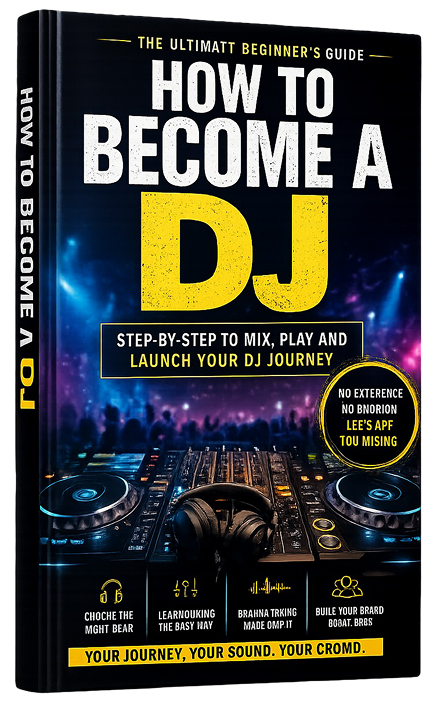
Step by Step to mix, play and launch your DJ journey with confidence.
- Beginner-friendly
- Easy to follow
- Packed with practical tips
 GET YOUR COPY NOW