
What Does a DJ Actually Do?
-
 Jun 28, 2026
 -
 By
Learn How To Be a DJ
By
Learn How To Be a DJ -
 Gear Reviews
 -
 9 min read
What Does a DJ Actually Do?
Have you ever watched a DJ perform and wondered, what does a DJ actually do? To many people, it can look as though a DJ is simply pressing play on one song after another. The reality is very different.
Professional DJs combine technical skill, musical knowledge, crowd psychology and years of practice to create unforgettable experiences. Whether they are performing at a wedding, nightclub, festival, corporate event or private party, every decision they make influences the atmosphere on the dance floor.
In this guide, you’ll discover exactly what DJs do before, during and after an event, what skills they need, what equipment they use and why DJing is far more than simply playing music.
If you’re thinking about becoming a DJ yourself, this guide will give you a realistic understanding of what the role involves.
Quick Answer
A DJ selects, mixes and performs music to entertain an audience. They read the crowd, choose the right songs at the right time, blend tracks together smoothly, manage energy levels, operate professional DJ equipment and create an enjoyable experience for everyone at an event.
Modern DJs also spend many hours preparing music, organising playlists, learning new techniques, marketing themselves and maintaining their equipment.
What Does a DJ Actually Do?
Although every DJ works differently, most perform the same core responsibilities.
| DJ Responsibility | Purpose |
|---|---|
| Selecting music | Keep the audience entertained |
| Reading the crowd | Understand what people want to hear |
| Mixing tracks | Create seamless transitions |
| Controlling energy | Build excitement throughout the event |
| Taking requests | Keep guests engaged when appropriate |
| Operating equipment | Deliver professional sound quality |
| Preparing playlists | Plan suitable music before events |
| Solving problems | Handle technical issues quickly |
| Entertaining | Create memorable experiences |
A DJ’s Job Starts Long Before the Event
Many beginners believe DJs simply arrive with speakers and start playing music.
In reality, most of the work happens before the first guest even arrives.
Professional DJs spend hours preparing for every booking.
Typical preparation includes:
Researching the Event
Every audience is different.
A wedding requires a completely different approach from a nightclub or birthday party.
The DJ will often learn:
- Guest age range
- Musical preferences
- Special requests
- Venue restrictions
- Event schedule
- Dress code
- Equipment requirements
Preparation allows the DJ to avoid surprises on the day.
Organising Music
Professional DJs spend countless hours building music libraries.
Songs are organised by:
- Genre
- BPM (tempo)
- Musical key
- Mood
- Decade
- Popularity
- Energy level
Having music organised makes finding the perfect song much easier during a live performance.
Preparing Playlists
Most DJs prepare playlists before arriving.
This does not mean every song is planned.
Instead, they create several possible playlists depending on how the audience responds.
Experienced DJs remain flexible.
Reading the Crowd
The Most Important Skill Every DJ Needs
Perhaps the biggest misconception is that DJs simply play their favourite music.
Successful DJs play what the audience wants to hear.
Reading the crowd means observing:
- Are people dancing?
- Are people leaving the dance floor?
- Is the energy increasing?
- Do guests prefer older classics?
- Are younger guests taking over?
Every song becomes a decision.
Sometimes changing just one record completely transforms the atmosphere.
Experienced DJs constantly monitor audience reactions.
Mixing Music Together
Another major part of DJing is mixing.
Mixing allows one song to flow naturally into the next without awkward silence.
Common mixing techniques include:
Beatmatching
Matching the tempo of two songs.
This creates smooth transitions.
EQ Mixing
Adjusting bass, mid and treble frequencies to avoid clashes between songs.
Phrase Mixing
Changing songs at the correct musical point.
This sounds far more natural.
Harmonic Mixing
Mixing songs that are in compatible musical keys.
This creates pleasant sounding transitions.
Although modern DJ software helps with many of these techniques, learning them manually develops much stronger DJ skills.
Controlling the Energy
Professional DJs rarely play random songs.
Instead, they build an emotional journey.
Imagine a nightclub.
The DJ usually starts with lower energy music.
As more people arrive, the music gradually becomes more energetic.
Later in the evening comes the biggest songs everyone knows.
Finally, towards closing time, the DJ carefully lowers the energy again.
This journey keeps audiences engaged for hours.
Creating Memorable Moments
Great DJs understand timing.
Sometimes waiting just thirty seconds before dropping a famous chorus creates a huge crowd reaction.
Other techniques include:
- Using build ups
- Creating anticipation
- Mixing unexpected classics
- Dropping crowd favourites
- Using acapellas
- Playing singalong records
The biggest moments often come from knowing exactly when to play the right song.
Managing Requests
Requests are part of many DJ jobs.
Especially:
- Weddings
- Birthday parties
- Corporate events
- Family celebrations
Good DJs balance requests with maintaining the atmosphere.
Playing every request immediately may empty the dance floor.
Experienced DJs politely fit suitable requests into the right part of the evening.
Operating Professional DJ Equipment
Modern DJs use a wide range of equipment.
Common DJ Equipment
| Equipment | Purpose | Recommended for Beginners |
| DJ Controller | Controls music software | Excellent |
| Laptop | Stores music library | Essential |
| DJ Software | Mixing music | Essential |
| Headphones | Cueing songs | Essential |
| Speakers | Audience sound | Essential |
| Microphone | Announcements | Often required |
Popular beginner equipment includes:
- Pioneer DJ controllers
- AlphaTheta controllers
- Numark controllers
- Hercules DJ controllers
- Denon DJ controllers
Professional venues often provide industry standard club equipment.
Working with DJ Software
Modern DJs commonly use software such as:
- rekordbox
- Serato DJ Pro
- VirtualDJ
- Engine DJ
- Traktor Pro
These programs help DJs:
- Organise music
- Set cue points
- Analyse BPM
- Prepare playlists
- Record mixes
- Create seamless performances
Learning your software is almost as important as learning to mix.
Speaking on the Microphone
Not every DJ uses a microphone.
However, mobile DJs often make announcements such as:
- First dance
- Cake cutting
- Birthday celebrations
- Last orders
- Event timings
Speaking clearly and confidently is another valuable DJ skill.
Solving Problems Quickly
No event ever goes perfectly.
Professional DJs stay calm when things go wrong.
Common challenges include:
- Faulty cables
- Equipment failures
- Last minute schedule changes
- Difficult requests
- Power interruptions
- Weather issues at outdoor events
Experience teaches DJs to solve problems quickly without the audience noticing.
What Skills Does a Good DJ Need?
Successful DJs combine technical ability with people skills.
Important qualities include:
Musical Knowledge
Knowing thousands of songs helps every performance.
Confidence
DJs perform in front of large audiences.
Confidence develops through experience.
Patience
Learning to DJ takes time.
Even experienced professionals continue learning.
Organisation
Keeping music libraries organised saves valuable time during performances.
Communication
DJs regularly communicate with:
- Clients
- Venue managers
- Wedding coordinators
- Promoters
- Sound engineers
Good communication leads to smoother events.
Pros and Cons of Being a DJ
Advantages
✔ Creative career
✔ Meet new people
✔ Share your love of music
✔ Flexible working opportunities
✔ Potential to earn good income
✔ Every event feels different
✔ Continuous learning
Disadvantages
✘ Late nights
✘ Heavy equipment
✘ Weekend working
✘ Competitive industry
✘ Constant music purchasing
✘ Equipment maintenance costs
✘ Long hours preparing behind the scenes
Common Beginner Misconceptions
Many aspiring DJs believe:
DJs Only Press Play
False.
Professional DJs constantly make decisions throughout every performance.
Expensive Equipment Makes You Better
False.
Skill matters far more than expensive equipment.
DJs Never Practise
False.
Even experienced professionals spend hours practising new techniques.
Bigger Music Libraries Mean Better DJs
Not necessarily.
Knowing your music is more valuable than owning millions of songs.
Every Crowd Wants the Same Music
Definitely not.
Every audience is unique.
Learning to adapt separates average DJs from excellent ones.
Expert Tips From Years Behind the Decks
If I could give one piece of advice to every beginner, it would be this:
Focus on entertaining people rather than impressing other DJs.
The audience remembers how you made them feel.
They rarely remember whether your transition was technically perfect.
Other valuable tips include:
- Learn your music inside out.
- Practise regularly.
- Record your mixes.
- Listen back objectively.
- Build playlists for different occasions.
- Stay calm under pressure.
- Always carry spare cables.
- Arrive early.
- Back up your music.
- Never stop learning.
The most respected DJs are those who consistently deliver great experiences rather than showing off complicated tricks.
Frequently Asked Questions
What does a DJ actually do all day?
Much of a DJ’s time is spent preparing music, organising playlists, practising mixing, promoting their business, maintaining equipment and communicating with clients. Performing is only one part of the job.
Do DJs just play songs?
No. Professional DJs carefully select songs, mix them together, read the crowd and manage the energy throughout an event.
Is DJing difficult to learn?
The basics can be learned surprisingly quickly, but becoming a confident, professional DJ takes regular practice and experience.
Do DJs need expensive equipment?
No. Many beginners start with affordable DJ controllers before upgrading as their skills improve.
Do DJs make good money?
Some DJs perform as a hobby, while others build successful full time businesses. Earnings depend on experience, reputation, location and the type of events they perform.
Why do DJs wear headphones?
Headphones allow DJs to prepare the next song privately before the audience hears it.
Can anyone become a DJ?
Yes. With practice, patience and a willingness to learn, almost anyone can develop DJ skills.
Do DJs still use vinyl?
Some do. Vinyl remains popular with many DJs, while others use digital controllers, CDJs or standalone systems.
How long does it take to become a good DJ?
Most beginners become comfortable after several months of regular practice. Professional confidence usually develops over years of performing.
What’s the most important skill a DJ needs?
Reading the crowd is often considered the most valuable skill because it helps DJs choose the right music at the right time.
Feature Image Suggestion
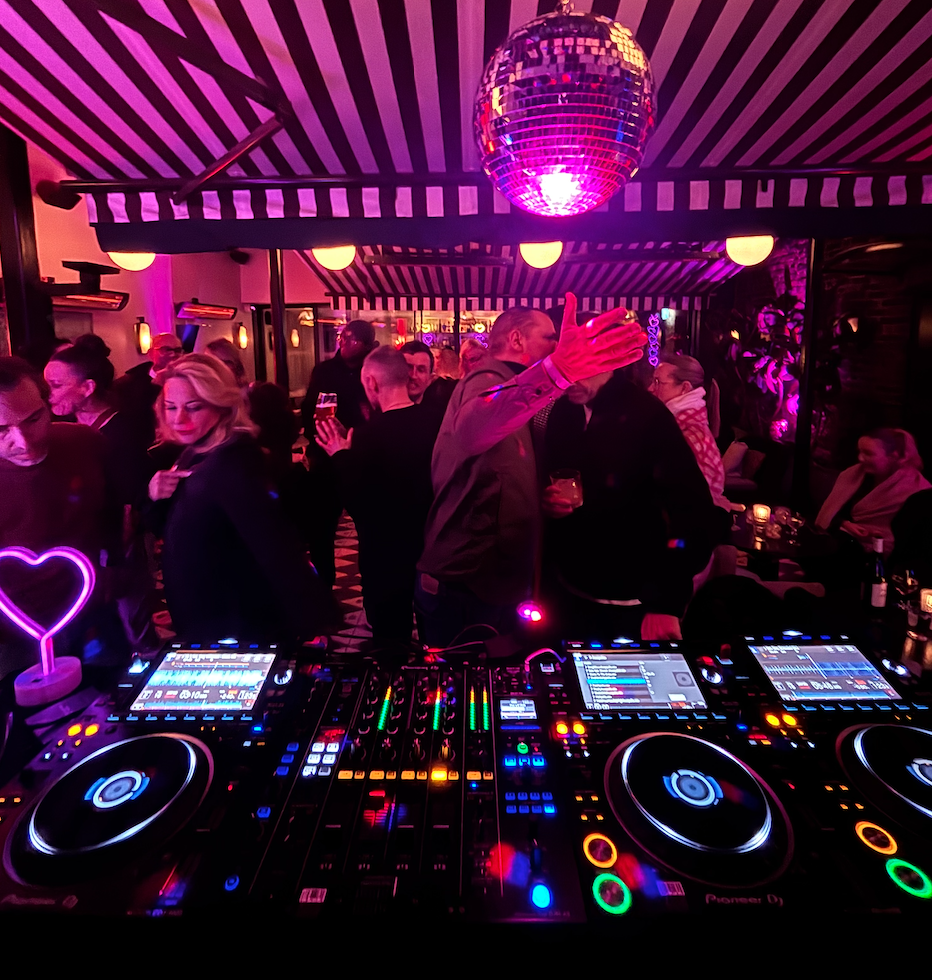
Royalty Free Image: A professional DJ performing in front of a packed dance floor with colourful club lighting, hands on a modern DJ controller and crowd dancing enthusiastically.
Suggested Alt Text: Professional DJ mixing music live showing what a DJ actually does during a performance.
Internal Link
Learn more about DJing, equipment, tutorials and beginner guides by visiting:
https://www.learnhowtobeadj.com/
Conclusion
So, what does a DJ actually do? The answer is much more than most people imagine.
A great DJ is part musician, part entertainer, part technician and part psychologist. They prepare music long before the event begins, read the crowd throughout the performance, mix songs seamlessly, solve problems under pressure and create memorable moments that people remember for years.
While the equipment certainly matters, the real skill lies in understanding people and knowing exactly which song to play at exactly the right moment.
If you’re inspired to begin your own DJ journey, keep learning, keep practising and remember that every professional DJ once stood exactly where you are today.
For more beginner guides, equipment reviews, tutorials and expert advice, explore the growing collection of articles at LearnHowToBeADJ.com and continue building your DJ skills with confidence.
Want The Complete Roadmap To Become A DJ?
Step by Step to mix, play and launch your DJ journey with confidence.
- Beginner-friendly
- Easy to follow
- Packed with practical tips
 GET YOUR COPY NOW