
Top 50 Best Songs by Moby
-
 Aug 01, 2026
 -
 By
Learn How To Be a DJ
By
Learn How To Be a DJ -
 DJ Playlist Ideas
 -
 6 min read
Top 50 Best Songs by Moby
Moby has enjoyed one of the longest and most commercially successful careers in electronic music. Since emerging from the early rave and techno scene in the late 1980s, he has released numerous international hit singles spanning techno, house, ambient, electronica, downtempo and pop. His music has sold millions of records worldwide and has become some of the most licensed music in television, film, advertising and video games.
The following list brings together Moby’s fifty most commercially successful and influential official songs. The ranking is based on a combination of worldwide chart performance, international sales, certifications, long term popularity, streaming success and lasting commercial impact. Where precise worldwide sales figures are unavailable, songs have been prioritised using official chart archives, recognised music industry databases, certification bodies and long term commercial success.
This is intended to be an evergreen reference for DJs, collectors, journalists and fans looking for Moby’s most important commercially released recordings. Release dates refer to the original commercial single release, while record labels reflect the original label that first issued each recording.
| No. | Track | Featured Artist(s) | Original Release Date | Original Record Label |
|---|---|---|---|---|
| 1 | Porcelain | None | 17 May 1999 | Mute |
| 2 | Natural Blues | None | 6 March 2000 | Mute |
| 3 | Why Does My Heart Feel So Bad? | None | 11 October 1999 | Mute |
| 4 | South Side | Gwen Stefani | 2000 | Mute |
| 5 | We Are All Made of Stars | None | 29 April 2002 | Mute |
| 6 | Extreme Ways | None | 2002 | Mute |
| 7 | Lift Me Up | None | 2005 | Mute |
| 8 | Honey | None | 31 August 1998 | Mute |
| 9 | Bodyrock | None | 26 July 1999 | Mute |
| 10 | Find My Baby | None | 2000 | Mute |
| 11 | In This World | None | 2002 | Mute |
| 12 | Sunday (The Day Before My Birthday) | None | 2002 | Mute |
| 13 | Feeling So Real | None | 1995 | Mute |
| 14 | Everytime You Touch Me | Rozz Morehead | 1995 | Mute |
| 15 | Into the Blue | None | 1995 | Mute |
| 16 | Go | None | 1991 | Instinct |
| 17 | Next Is the E | None | 1992 | Instinct |
| 18 | Move (You Make Me Feel So Good) | None | 1993 | Instinct |
| 19 | James Bond Theme (Moby’s Re-Version) | None | 1997 | Mute |
| 20 | New York, New York | Debbie Harry | 2006 | Mute |
| 21 | Slipping Away | None | 2006 | Mute |
| 22 | Disco Lies | None | 2008 | Mute |
| 23 | Ooh Yeah | None | 2008 | Mute |
| 24 | Pale Horses | Amelia Zirin-Brown | 2008 | Mute |
| 25 | Shot in the Back of the Head | None | 2009 | Mute |
| 26 | Mistake | None | 2009 | Mute |
| 27 | Wait for Me | None | 2009 | Mute |
| 28 | Be the One | None | 2011 | Little Idiot |
| 29 | The Day | Heather Graham | 2011 | Little Idiot |
| 30 | Lie Down in Darkness | None | 2011 | Little Idiot |
| 31 | A Case for Shame | Cold Specks | 2013 | Little Idiot |
| 32 | The Perfect Life | Wayne Coyne | 2013 | Little Idiot |
| 33 | Almost Home | Damien Jurado | 2013 | Little Idiot |
| 34 | Long Ambients 1 | None | 2016 | Little Idiot |
| 35 | Mere Anarchy | None | 2018 | Little Idiot |
| 36 | Like a Motherless Child | Raquel Rodriguez | 2018 | Little Idiot |
| 37 | Power Is Taken | D.H. Peligro | 2021 | Deutsche Grammophon |
| 38 | Heroes | Mindy Jones | 2021 | Deutsche Grammophon |
| 39 | Refuge | None | 2018 | Deutsche Grammophon |
| 40 | Almost Loved | None | 2016 | Little Idiot |
| 41 | Run On | None | 1999 | Mute |
| 42 | Raining Again | None | 2005 | Mute |
| 43 | Beautiful | None | 2005 | Mute |
| 44 | Dream About Me | None | 2008 | Mute |
| 45 | One of These Mornings | Patti LaBelle (sample) | 2003 | Mute |
| 46 | Thousand | None | 1993 | Instinct |
| 47 | Hymn | None | 1995 | Mute |
| 48 | Ah Ah | None | 2008 | Mute |
| 49 | Everloving | None | 2003 | Mute |
| 50 | Signs of Love | None | 1994 | Instinct |
Why These Songs Belong in Every DJ Collection
Moby occupies a unique position in dance music history. Unlike many electronic producers who remained within club culture, Moby successfully bridged underground dance music with mainstream pop audiences while maintaining artistic credibility.
His productions combine house, techno, breakbeat, ambient, blues, gospel, rock and downtempo influences, making his catalogue exceptionally versatile for DJs. Tracks such as Go, Feeling So Real, and Move (You Make Me Feel So Good) remain classics of early 1990s rave culture, while Porcelain, Natural Blues, Why Does My Heart Feel So Bad? and South Side became defining crossover records that introduced electronic music to millions around the world.
Many of these records continue to appear in films, television programmes, commercials and streaming playlists decades after their release. Moby’s music is also valued by DJs because it works across multiple settings including clubs, festivals, bars, lounges, radio shows, sunset sessions and chill out rooms.
Whether playing house music, electronica, progressive, melodic or downtempo sets, these recordings remain essential additions to any serious DJ’s music library.
History
Richard Melville Hall, better known as Moby, began releasing electronic music in the late 1980s before achieving international recognition with Go in 1991. Throughout the 1990s he became one of America’s leading electronic music producers before reaching worldwide superstardom with the landmark album Play.
Released in 1999, Play transformed the commercial possibilities of electronic music. Every track from the album was licensed for films, television, advertisements or video games, an unprecedented achievement that significantly expanded the audience for dance music.
Moby subsequently enjoyed continued international success with albums including 18, Hotel, Last Night, Wait for Me and numerous ambient projects. His ability to blend blues samples, gospel vocals, electronic beats and emotional songwriting has made him one of the most influential electronic artists of the modern era.
With millions of records sold worldwide and countless awards and nominations, Moby remains one of electronic music’s most respected producers and composers.
10 Fun Facts About Moby
- Moby’s stage name comes from his distant family connection to Herman Melville, author of Moby-Dick.
- His breakthrough single Go samples the theme music from the television series Twin Peaks.
- Every track on Play was licensed for commercial use, a music industry first.
- Moby has sold more than 20 million records worldwide.
- He is a passionate animal rights activist and has been vegan for decades.
- He owns his own record label called Little Idiot.
- Moby has released numerous ambient albums designed specifically for relaxation and meditation.
- His music has appeared in hundreds of films, television programmes and advertisements.
- Extreme Ways became synonymous with the Bourne film franchise.
- Moby continues to release new music while also writing books, producing documentaries and supporting charitable causes.
Learn How to Become a DJ
Inspired by Moby’s incredible catalogue and want to start your own DJ journey?
Whether you dream of performing at clubs, festivals, private events or simply mixing your favourite tracks at home, learning the right techniques from the beginning can dramatically accelerate your progress.
The comprehensive How to Become a DJ</a> guide has been created specifically for beginners and aspiring DJs who want practical, real world advice from experienced professionals. Inside the ebook you will discover how to choose the right DJ equipment, beatmatch confidently, build professional playlists, organise your music library, understand phrasing, create seamless transitions, prepare for live performances and develop the skills needed to perform with confidence.
Whether your passion is house, techno, trance, drum and bass, hip hop or commercial dance music, this step by step resource provides the knowledge needed to build solid DJ foundations and continue improving long after your first performance.
Want The Complete Roadmap To Become A DJ?
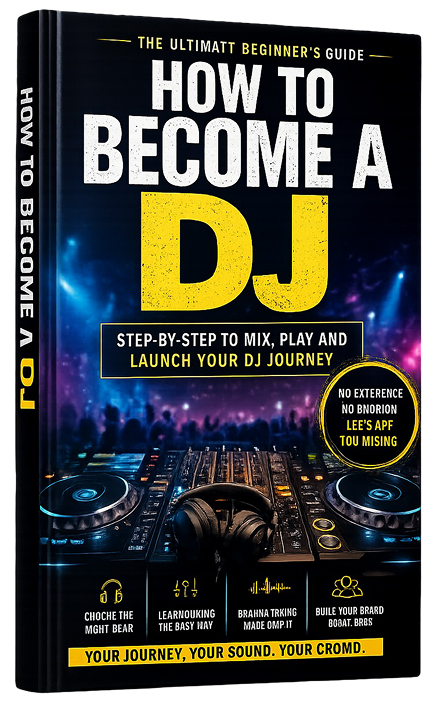
Step by Step to mix, play and launch your DJ journey with confidence.
- Beginner-friendly
- Easy to follow
- Packed with practical tips
 GET YOUR COPY NOW