
What Equipment Do I Need to Start DJing?
-
 Jun 28, 2026
 -
 By
Learn How To Be a DJ
By
Learn How To Be a DJ -
 Gear Reviews
 -
 6 min read
What Equipment Do I Need to Start DJing?
Starting your DJ journey is exciting, but it can also feel overwhelming. One of the first questions every beginner asks is, what equipment do I need to start DJing? Walk into any DJ equipment shop or browse online and you’ll find thousands of products, from professional club mixers costing several thousand pounds to beginner controllers that are surprisingly affordable.
The good news is that becoming a DJ has never been easier. Modern technology means you no longer need to spend a fortune to learn the fundamentals of mixing music. With the right equipment, a willingness to practise and plenty of enthusiasm, you can begin developing your skills from the comfort of your own home.
Having spent many years performing at weddings, private events, corporate functions and clubs, I’ve seen countless beginners make the same mistake. They often believe expensive equipment will instantly make them better DJs. The reality is quite different. Great DJs are made through practice, music selection and understanding their audience, not simply by owning the most expensive gear.
This guide explains exactly what equipment you need, what you can safely avoid buying at first and how to build a DJ setup that will grow with your skills.
Quick Answer
If you’re asking what equipment do I need to start DJing, the essential items are:
| Equipment | Essential? | Why You Need It |
|---|---|---|
| Laptop or Computer | Yes | Stores your music and runs DJ software |
| DJ Controller | Yes | Controls your music and allows mixing |
| DJ Software | Yes | Loads and mixes your tracks |
| Headphones | Yes | Cue the next track before the audience hears it |
| Speakers | Recommended | Allows you to hear your mixes properly |
| Music Library | Yes | Your collection of songs to mix |
| USB Drive | Optional | Useful for club DJs using CDJs |
| Microphone | Optional | Helpful for mobile and wedding DJs |
| Flight Case | Optional | Protects your equipment when travelling |
A beginner setup does not need to be expensive. Many excellent starter systems can be built for a few hundred pounds.
Why Choosing the Right Equipment Matters
Buying the correct equipment from the beginning saves both money and frustration.
Many beginners waste hundreds of pounds on items they never use. Others purchase equipment that quickly limits their progress.
A sensible beginner setup should be:
- Easy to learn
- Reliable
- Expandable
- Affordable
- Compatible with industry standard software
Think of your first setup as a training ground rather than your forever equipment.
The Essential DJ Equipment Every Beginner Needs
DJ Controller
A DJ controller is the centrepiece of most beginner setups.
It combines two virtual decks, a mixer and performance controls into one compact device.
Instead of buying separate turntables and mixers, a controller gives you everything needed to start mixing immediately.
Typical controls include:
- Jog wheels
- Tempo sliders
- EQ controls
- Performance pads
- Cue buttons
- Play and pause buttons
- Mixer section
- Effects controls
For beginners, controllers offer incredible value while teaching skills that transfer to professional equipment later.
Laptop or Desktop Computer
Most beginner DJ controllers connect directly to a computer.
Your computer runs the DJ software and stores your music collection.
Fortunately, you don’t need an expensive gaming computer.
Look for:
- Modern processor
- At least 8GB RAM
- SSD storage
- Reliable USB ports
- Good battery life if using a laptop
Always keep your operating system and DJ software updated before performances.
DJ Software
DJ software is what allows you to load, organise and mix music.
Popular choices include:
- rekordbox
- Serato DJ Lite
- Serato DJ Pro
- VirtualDJ
- Traktor Pro
- djay Pro
Many beginner controllers include free software, making it even easier to get started.
The software displays:
- Waveforms
- BPM
- Track information
- Beat grids
- Playlists
- Effects
- Recording features
Spend time learning your software as thoroughly as your hardware.
DJ Headphones
Headphones are one piece of equipment you should never compromise on.
Good DJ headphones let you prepare the next song while the audience continues listening to the current track.
Look for:
- Closed-back design
- Comfortable ear cushions
- Swivelling ear cups
- Replaceable cable
- Strong bass response
- Durable construction
Remember, DJ headphones are designed for monitoring rather than casual listening.
Speakers
Practising through laptop speakers simply isn’t enough.
Even a modest pair of speakers helps you hear:
- Bass levels
- Vocal clarity
- Timing
- EQ changes
- Overall mix quality
For home practice you can choose:
Studio Monitors
Best for:
- Accurate sound
- Learning EQ
- Producing music
- Bedroom studios
Powered PA Speakers
Best for:
- Parties
- Mobile DJs
- Weddings
- Outdoor events
Many beginners start with studio monitors before investing in larger PA systems.
Music
No equipment matters without great music.
Build your collection carefully.
Purchase music legally from reputable download stores or subscribe to professional DJ record pools.
Organise your library by:
- Genre
- BPM
- Energy level
- Year
- Mood
- Event type
Well-organised music saves huge amounts of time during performances.
Optional Equipment Worth Buying Later
As your confidence grows, consider adding:
Microphone
Ideal for:
- Wedding DJs
- Mobile DJs
- Corporate events
- Birthday parties
Learning microphone technique is an important skill if you plan to entertain audiences.
External Hard Drive
Protect your music collection by keeping regular backups.
Always follow the rule:
One music collection is no music collection.
Keep multiple copies.
USB Memory Sticks
Many professional venues use Pioneer CDJs.
Exporting playlists onto USB drives prepares you for club performances.
Flight Case
Protecting your equipment is just as important as buying it.
A quality flight case prevents expensive damage during transport.
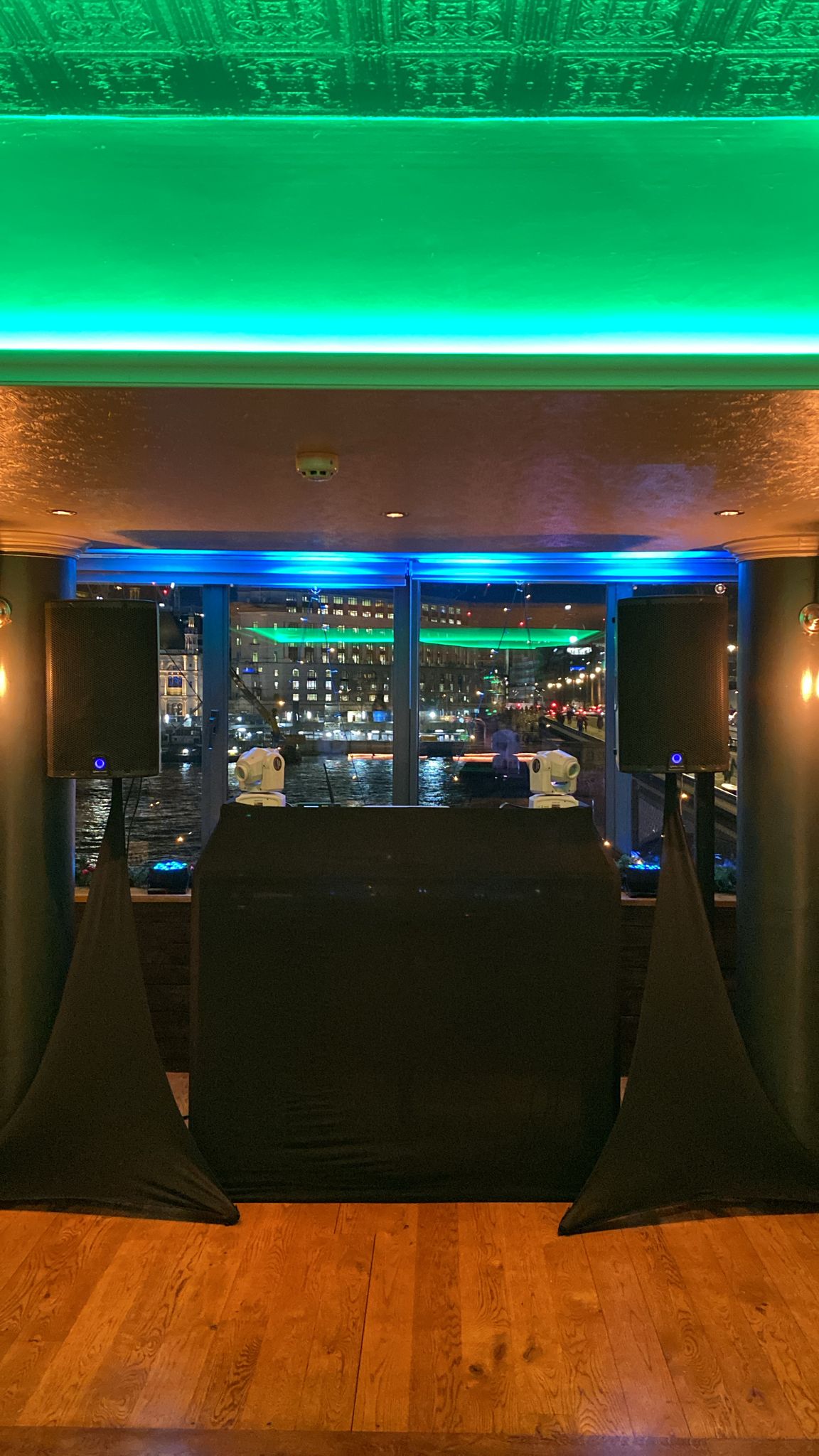
DJ Lighting
Lighting adds atmosphere.
Popular beginner options include:
- LED wash lights
- Derby lights
- Moving heads
- Laser effects
- Uplighters
Lighting is not essential for learning but becomes valuable for mobile DJs.
Equipment Comparison Table
| Equipment | Beginner | Intermediate | Professional |
| DJ Controller | Entry-level controller | Four-channel controller | Club-standard setup |
| Software | Free version | Professional licence | Professional licence |
| Speakers | Studio monitors | Small PA | Professional PA |
| Headphones | Entry DJ headphones | Mid-range headphones | Premium headphones |
| Music Library | Starter playlists | Expanded genres | Extensive professional library |
| Storage | Laptop SSD | External SSD | Multiple backups |
| Lighting | None | Basic effects | Full lighting rig |
How Much Should You Spend?
One of the biggest mistakes beginners make is overspending too early.
A sensible budget might look like this:
| Item | Approximate Budget |
| Controller | £200–£500 |
| Headphones | £50–£150 |
| Speakers | £100–£400 |
| Laptop | Existing laptop or £500+ |
| Music | Ongoing investment |
Remember that your skills will always matter more than your equipment.
A talented DJ using modest gear will almost always outperform an inexperienced DJ with the latest flagship setup.
Should You Buy Second-hand Equipment?
Buying used equipment can save a considerable amount of money.
However, always check:
- Buttons work properly
- Jog wheels respond correctly
- Faders move smoothly
- USB ports are undamaged
- Outputs function correctly
- Software licences can be transferred
Buying from reputable sellers provides additional peace of mind.
Want The Complete Roadmap To Become A DJ?
Step by Step to mix, play and launch your DJ journey with confidence.
- Beginner-friendly
- Easy to follow
- Packed with practical tips
 GET YOUR COPY NOW